





When the Italian designer Gaetano Pesce introduced the UP5 & UP6 Chair in 1969, it appeared in a design landscape still largely shaped by modernist restraint. Furniture from that period often emphasized clarity, geometry, and a certain visual discipline. Pesce’s chair arrived with a very different attitude.
The piece consists of a large upholstered armchair connected by a cord to a spherical ottoman. The form is rounded and exaggerated: wide armrests, deep curves, and a silhouette that feels closer to sculpture than to conventional seating. Sitting in it is comfortable enough, but the object never fully disappears into the room the way most furniture does. Its shape immediately suggests a body—something soft, weighted, and slightly off-balance.
Pesce was quite open about the reference. The chair, he said, was intended to evoke the female figure, while the attached sphere represented a ball and chain. The metaphor was blunt by design. At the end of the 1960s, debates about gender roles and social expectations were becoming increasingly visible in public life, and Pesce wanted the object to reflect that tension. The UP5 chair therefore carried a symbolic dimension unusual for furniture: it placed an image of constraint directly inside the domestic interior. The visual language of the chair reinforces this reading. Its proportions recall prehistoric fertility figures—the kind of small sculptures in which hips and torso are emphasized through exaggerated volume. Pesce translates that ancient vocabulary into polyurethane foam and stretch fabric, turning what might have been a purely sculptural reference into a piece of industrial design.
The manufacturing process also contributed to the chair’s notoriety. The UP series was produced using expanded polyurethane foam and shipped in a compressed state. Vacuum packaging allowed the chair to be flattened for transport; once the packaging was opened, the foam gradually returned to its original shape. For the buyer, unpacking the chair meant watching it slowly regain its volume. What arrived in the living room was not just an object but a brief transformation—from compressed industrial product to a fully formed piece of furniture. This technical aspect mattered because Pesce was interested in challenging the idea that industrial production had to result in uniform, neutral objects. The late-modernist interior often aimed for visual control and clarity. Pesce, by contrast, seemed comfortable with objects that were expressive, even slightly awkward. The UP5 chair does not attempt to refine its bodily associations into abstraction. The metaphor remains visible in the form itself.
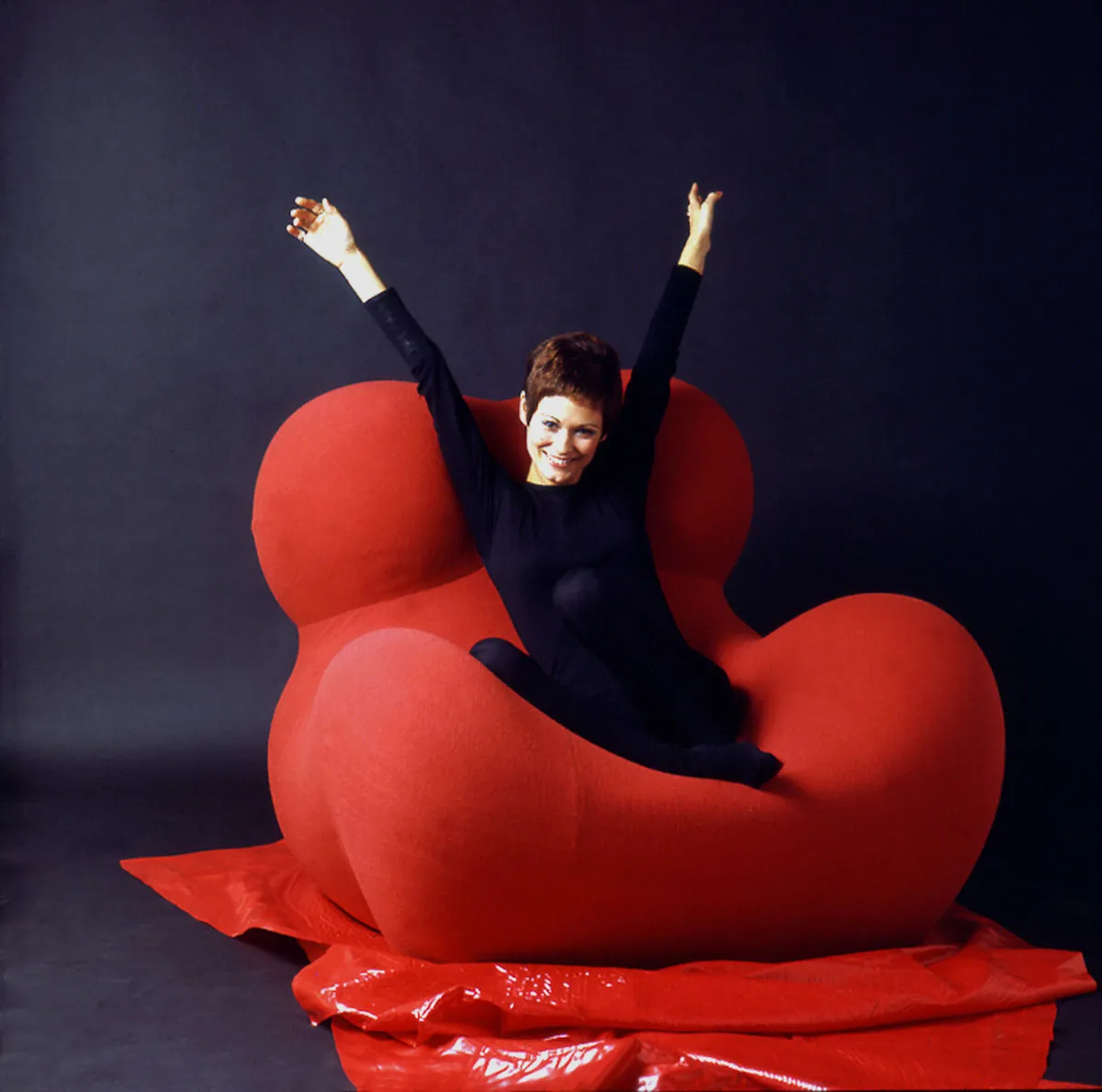
More than fifty years later, the piece remains one of the most recognizable works of late-1960s Italian design. Part of its longevity comes from its ambiguity. Some viewers read the chair primarily as a critique of social structures that restrict women’s freedom. Others see it as a provocative but uneasy image of the female body within domestic space. The object never fully settles into one interpretation. That uncertainty is part of what keeps the chair from becoming entirely comfortable as a design classic. It occupies an unusual position somewhere between furniture, sculpture, and visual commentary. Even today, placed in a living room or museum gallery, the object retains a slightly disruptive presence—soft in material, but conceptually difficult to ignore.