





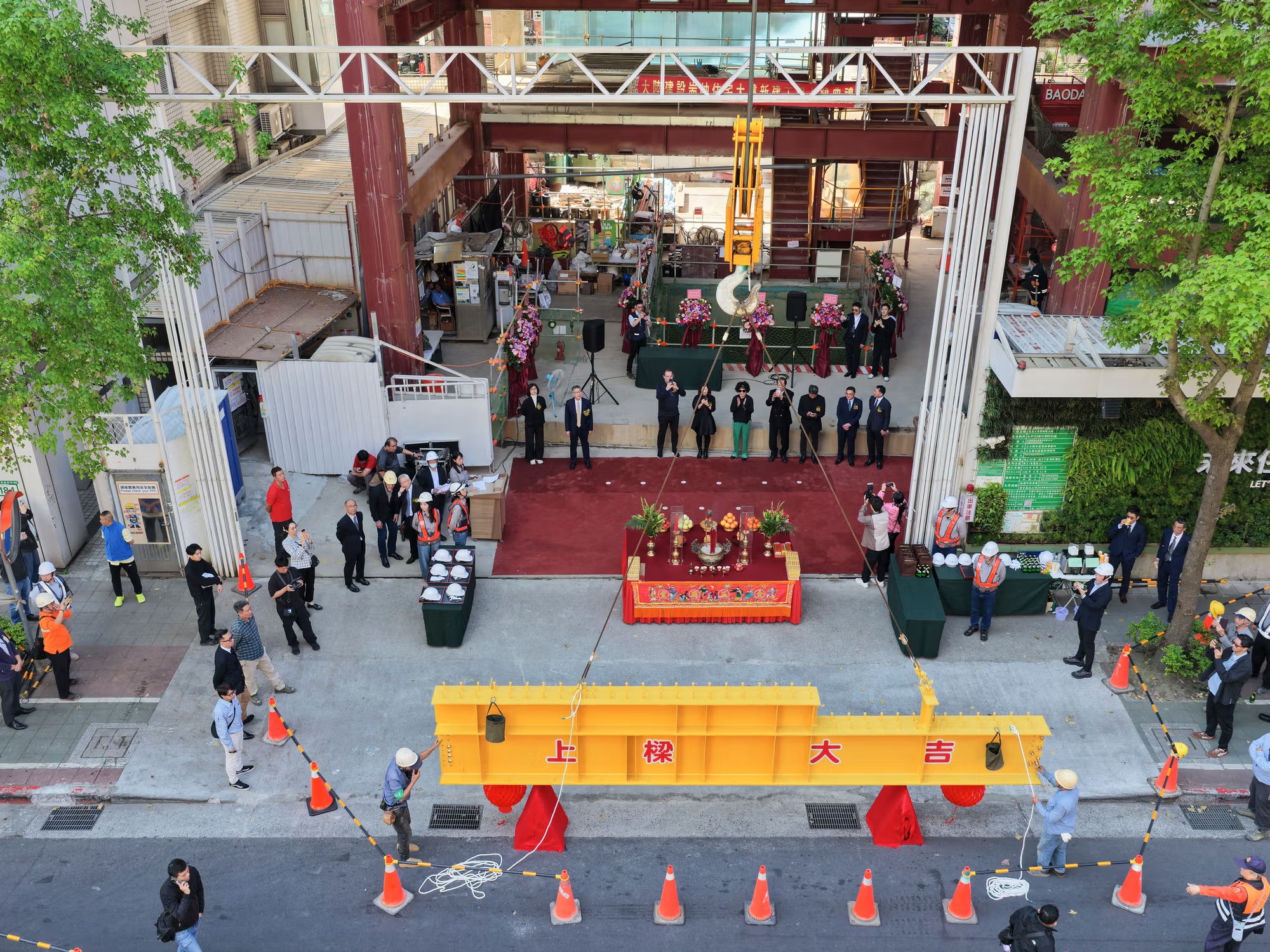
OMA’s Metropolitan Village in Taipei has reached a key construction milestone, with the main structure of the 23-storey residential tower now completed. The topping out marks the moment when the building’s full form—its stacked volumes and overall massing—becomes legible within the city.
For OMA, housing has often appeared as a question rather than a fixed type. In Taipei, that question takes on a more specific form: what does an apartment building look like when work is no longer separate from home? The answer, in Metropolitan Village, is not a new unit plan but a different arrangement of the building itself. Instead of a uniform stack of floors, the tower—designed by David Gianotten and Chiaju Lin—is broken into a series of volumes clustered around a central core. The result is less a singular tower than a collection of smaller blocks held together vertically. This fragmentation does two things. It allows for a wider range of apartment types, but more importantly, it shifts how the building is read. The tower doesn’t present itself as a continuous object. It behaves more like an aggregation—something closer to a neighborhood compressed into height.

That idea carries through the interior organization. Instead of concentrating amenities at the base or the top, shared spaces are distributed throughout the building: workspaces at ground level, social areas in the middle, and leisure spaces above. The arrangement avoids a single “center” of activity, spreading it across the structure. In that sense, the project treats the residential tower less as a container of private units and more as a piece of shared infrastructure.
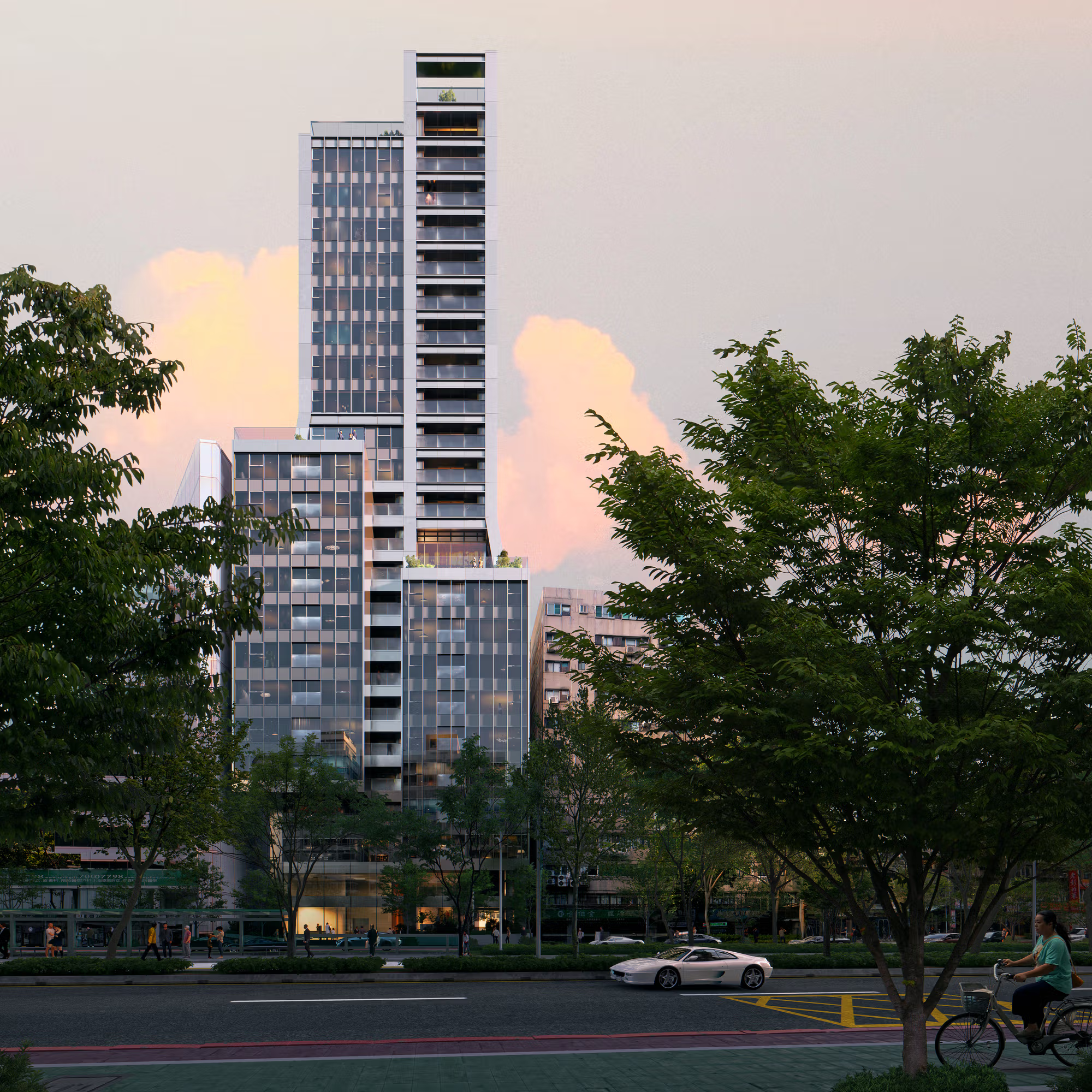
The building’s position between the Xinyi business district and the smaller-scale Wenchang neighborhood reinforces this approach. Rather than choosing one scale over the other, the project negotiates between them. The lower volumes lift to create a passage through the site, allowing movement between the two conditions. This is a familiar OMA strategy—treating the ground not as a boundary but as something that can be opened, redirected, or extended. The façade continues this logic of variation. Different volumes are expressed through shifts in material and surface, while patterned glass—borrowed from older Taiwanese interiors—appears in areas where privacy is less critical. From a distance, the building reads as a composite. Up close, it registers as a series of individual conditions.
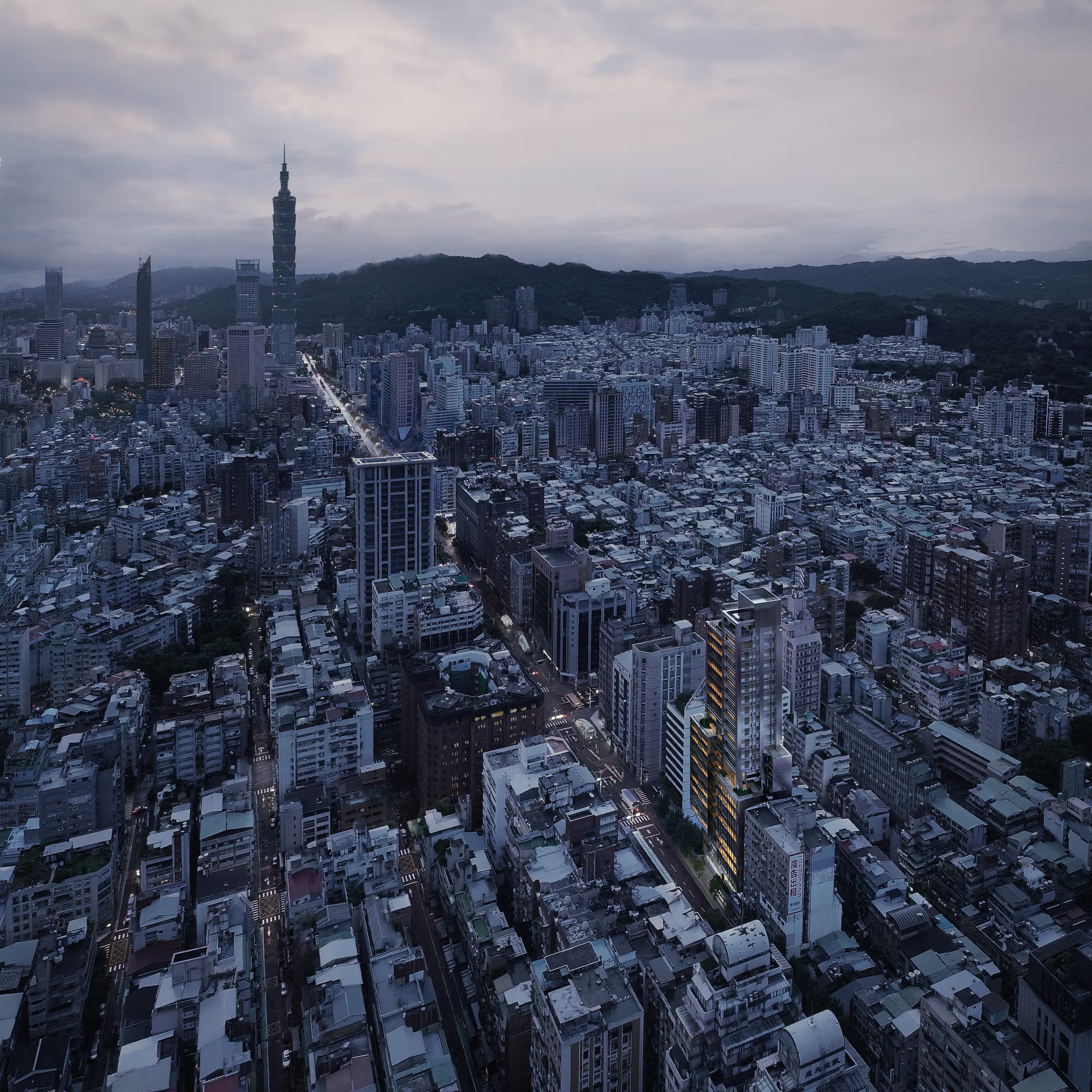
What’s notable is that none of these moves are particularly radical on their own. Mixed-use programming, flexible layouts, shared amenities—these are already common in contemporary housing. The difference here is how systematically they are combined. OMA is not proposing a new housing type as much as reorganizing existing ones into a single structure.
The project is scheduled for completion in 2027. With the structure now in place, what remains is the interior fit-out and façade detailing—elements that will determine how this “vertical village” is ultimately experienced.